
Purchase Tickets


The Grand Kankakee Marsh
December 11, 2025
When I was tasked with writing an article for Connections that focused on northern Indiana, I did not know what I wanted to write about. I am originally from northeast Ohio, so I was not familiar enough with Indiana history to have a topic ready to research. One of the potential sources I could use from the Indiana Historical Society was a collection of oral histories about the Grand Kankakee Marsh. I had worked with oral histories before on some of my undergraduate research projects, so this was a source that piqued my interest. The collection, The Settling of the Grand Marsh of the Kankakee River: Oral History Interviews, contains interviews from eighteen individuals discussing their lives and their home in DeMotte, Indiana, in the early twentieth century.
At the beginning of my research, I looked up the Grand Kankakee Marsh. I found information from northern Indiana organizations and researchers on both historical and environmental aspects of the marsh. The Hoosier Valley Railroad Museum shared that the Grand Kankakee Marsh was known as the “Everglades of the North” and had once covered more than 500,000 acres. From just this information, I started to understand the vastness of what this marsh used to be, and it had me wondering what had happened to it. How could something so big disappear?
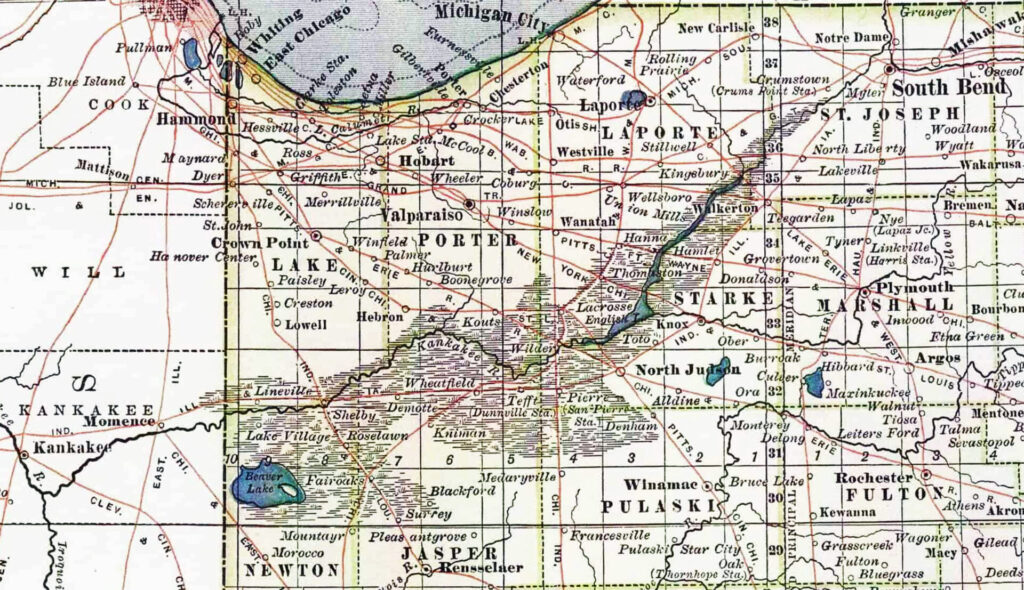
This map, created between 1859 and 1889, shows the vastness of the Kankakee Marsh. It covered a large portion of northwestern Indiana before the draining of the Kankakee River. Credit: General Lew Wallace Study and Museum
As I continued to learn more, I read about how well-known the marsh was during its prime. Not only were local residents frequent visitors to the marsh, as the oral history interviews mentioned, but more famous individuals visited as well. Civil War general Lew Wallace and Presidents Benjamin Harrison, Grover Cleveland, and Theodore Roosevelt had all visited the marsh at some point in their lives, using it as hunting and fishing grounds or just as a place to relax in nature. Combining secondary sources with the information from the oral history interviews, I was able to gain a more complete understanding of what the Grand Kankakee Marsh had meant to people.
The more I discovered, the more curious I was to learn about what had happened to the marsh. Many of the secondary sources talked about how the marsh was depleted, often sharing statistics about how small the marsh became over time. The primary sources, however, contained firsthand accounts of how the marsh had changed over the interviewees’ lifetimes. It provided descriptions where simple numbers or statistics could not. People were straightening the river and harvesting the trees for lumber. There were fewer animals than there had once been. The interviews were key to seeing how the changing marsh affected the residents’ lives and how they noticed the changes.
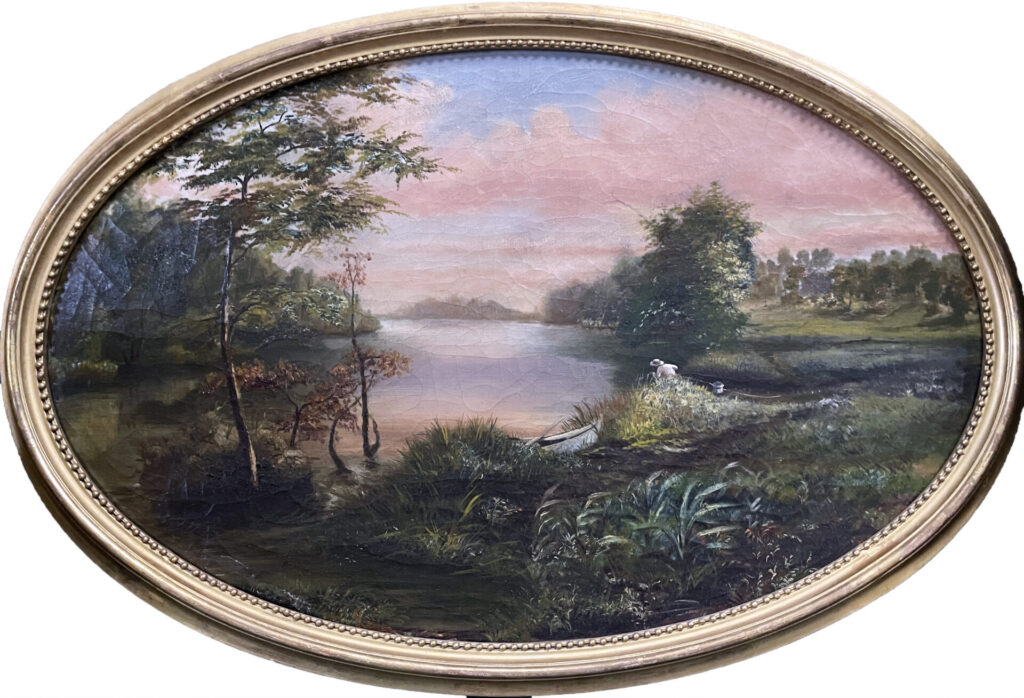
Lew Wallace painted The Grand Kankakee, depicting the beauty of the marsh as it was in the late nineteenth century. Credit: General Lew Wallace Study and Museum
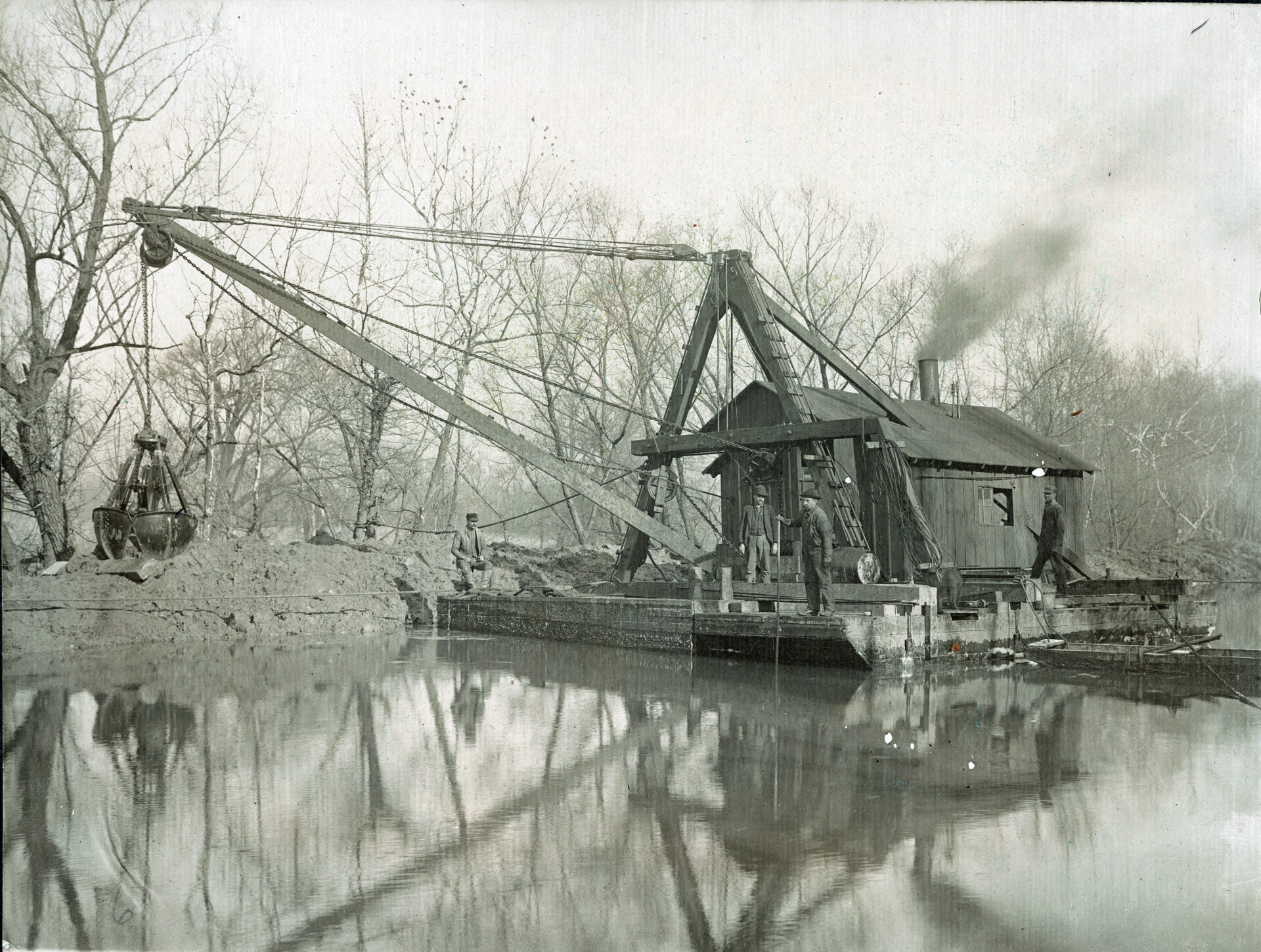
Researching how and why the marsh changed encouraged me to understand things I had not previously thought of learning about. In one specific instance, I traveled down a research rabbit hole regarding the draining of the marsh. Part of the marsh was dredged, something that was totally unfamiliar to me. I had no idea what dredging was or how it worked. Upon further research, I found dredging to be the act of removing sediments, such as sand, rocks, and sludge, from the bottom of a body of water. Something I found useful when trying to figure out what dredging entailed, especially in the early twentieth century, was to look at images. Thankfully, the IHS had a digitized image of a dredge used to help build a canal in its collection that helped me visualize this process. It appears at the top of this blog.
While this article forced me out of my comfort zone, I learned many new things that I likely never would have thought about otherwise. To read the article and learn more about the Grand Kankakee Marsh, the people living nearby, and the changes they all went through, look for “Man Versus Nature: Settlers and the Grand Kankakee Marsh” by Kaitlyn Leib in the Spring/Summer 2025 issue of Connections in the Members’ section of the IHS website.